


Review of PBM Contraindications, Part 1
Laser therapy, also known as photobiomodulation (PBM), is a non-invasive modality that delivers red and infrared laser light to biological tissue with the goals of stimulating cellular processes and enhancing the activation of biochemical mechanisms. Let's examine the contraindications for laser therapy.
A contraindication is a condition that makes a procedure inadvisable; and may be absolute or relative. An absolute contraindication is a situation that makes a particular treatment absolutely inadvisable, such as shining a therapy laser directly into the eye. A relative contraindication is a condition that makes a particular treatment possibly inadvisable, such as a recent steroid injection.

Case Report: Noninvasive Treatment of Diabetic Peripheral Neuropathy
PBM treatments are proven to significantly reduce pain and improve the quality of life for patients suffering from diabetic peripheral neuropathy (DPN). PBM treatments are shown to reduce the levels of inflammatory markers in patients with DPN, which is important because heightened inflammation is one of the contributory factors for pain and disability.

Managing Ankle Sprains: Why ice is the wrong option and there is a better solution.
For years, ice has been used to treat acute injuries under the premise that it alleviates pain, reduces tissue metabolism and reduces swelling. It has been a standard treatment for injuries and sore muscles because it helps to relieve pain caused by injured tissue. Health care providers have used and recommended the RICE guideline for decades, but now it appears that both ice and immobilization may delay healing.
In 2015, Dr. Mirkin completely reversed course and now strongly advocates against the use of ice on acute injuries. Healing requires inflammation; and anything that reduces or suppresses inflammation will also delay healing.
Photobiomodulation (Laser Therapy) & Immune Function
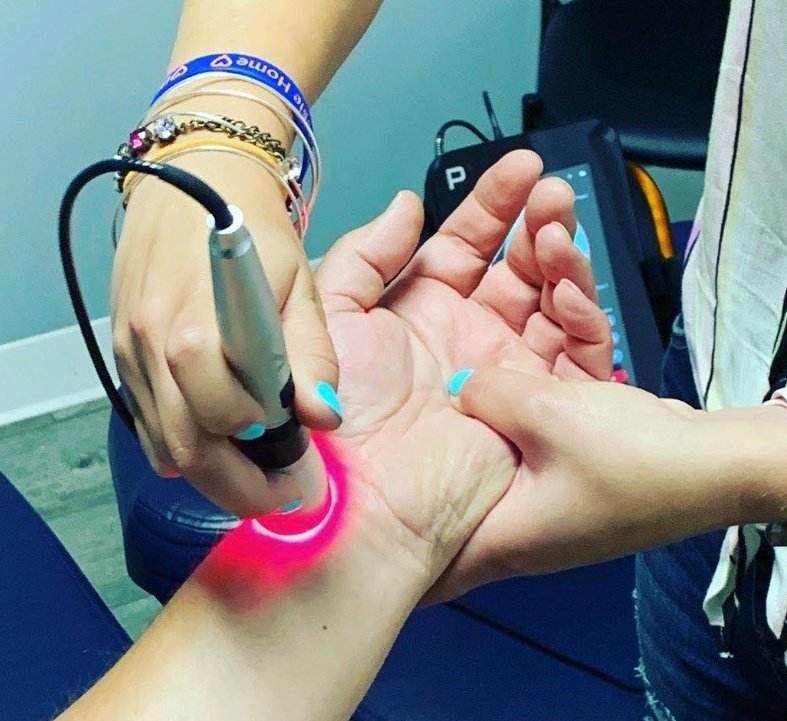
The human immune system acts a defense mechanism against potentially harmful invaders, such as bacteria and viruses. Photobiomodulation treatments can stimulate immune responses, and treatment targeting the lymph nodes or spleen can amplify the effect. Therapeutic laser is a safe, effective immunomodulator that can be applied to patients of all ages with a wide variety of clinical conditions.

Photobiomodulation for Neuropathy
Peripheral neuropathy is a serious problem regardless of the cause. Chiropractors are in a unique position to safely and effectively treat peripheral neuropathy with PBM delivered from a class 4 therapeutic laser.
Get Paid for Laser Therapy
As part of our ongoing efforts to help translate research into practice, the Council on Chiropractic Guidelines and Practice Parameters (CCGPP), also known as the Clinical Compass, is working to translate scientific research into tools that the profession can use to improve clinical practice. There are no guarantees, but you can increase your chance of success.
For more information about other conditions that may be responsive to PBM and how to support the medical necessity of your proposed treatment plan, go to https://clinicalcompass.org/resources/clinical-guidelines/https://clinicalcompass.org/resources/clinical-guidelines/

NAALT 2013: Spotlight on Laser Therapy
NAALT represents clinicians who use or are interested in therapeutic light. The aim of the organization is to improve the understanding of the mechanisms, basic laser physics, safety, treatment parameters, techniques, regulatory issues and reimbursement of laser therapy for health practitioners.

Pulsing in Laser Therapy: Possible Physiological Effects
Therapeutic laser technology and clinical applications are on the "front" of the wave. The use of pulsed and modulated frequencies versus CW to more specifically address certain conditions has a significant body of evidence, and more research will enhance the effectiveness of laser therapy treatments in the years to come.
Pulsing in Laser Therapy: Understanding different output modes
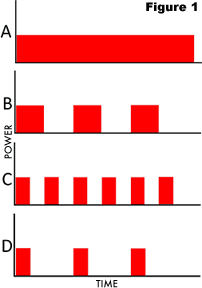
Therapeutic laser light can also be modulated, or flashed on and off many times per second. The mechanism of how the laser light is modulated inside the laser unit is a topic for another article. Here we are focusing on what the tissue "sees." Whether the light is turned on and off by flipping a switch or by passing a shutter in its path, the outcome is the same: laser light that is flashing.

Talking About Lasers: NAALT Conference Review
The purpose of NAALT is to be a forum for therapeutic light therapy practitioners in North America (Mexico, USA and Canada). It is our intention to promote phototherapy as a valid treatment, and to improve understanding of photobiological mechanisms, basic therapeutic light physics, safety, treatment parameters, techniques, regulatory issues and reimbursement.

Physics for Chiropractors: Can Laser Therapy Damage Tissue?
While exhibiting at a chiropractic trade show a couple years ago, a wily old doctor asked me, "How do you know you're not causing cancer?" which is an excellent question. Let's talk about laser and its effects on tissue.

Physics for Chiropractors: Laser Eye Safety for Class IV Therapy Lasers
To summarize, an increasing number of chiropractors are discovering Class IV therapy lasers to be an effective modality for pain management and injury healing. They have the ability to deliver a therapeutic dosage in less time, but also carry an increased risk of eye injury and must be used in a closed room with everyone wearing laser-specific eye protection.

Physics for Chiropractors: Calculating the Energy Density of a Therapy Laser
This article will help you calculate the energy density of a therapy laser.

Class IV Therapy Lasers Maximize Primary Biostimulative Effects
This new class of therapeutic lasers of laser therapy delivers higher-powered penetrating infrared energy to deeper target sites, as well as shortening treatment times for wide area applications.
“Class 4 Laser Therapy will be an integral modality worldwide in all fields of healthcare.”
— Dr. Phil Harrington, lecturing in Malaysia
